
The Proof: Product Marketing
The time I realized the company was pitching five different versions of the same product, so I gave it exactly one voice and turned it into the internet's go-to answer for what the product actually does.
The One Where I Made a Product the #1 Answer on Google and ChatGPT
The problem: The brand had a product worth buying and no one telling its story the same way twice. The founder pitched one way. Sales presented another story. So I, the marketer, was left guessing. There was no product marketing function, just a lot of opinions.
The remedy: Build a product marketing function from scratch: turn scattered product knowledge into one consistent narrative, then arm sales and marketing with it.
The result: The content built from this system became the #1 referenced source for the product across both traditional SEO and LLM-driven search — meaning when someone Googled the product or asked an AI to compare it to competitors, this was the answer they got. (Full breakdown in the AEO section.)
The details: There was no shortage of product knowledge at the company. There was just no shared product knowledge. Ask five people to pitch the same feature and you'd get five different pitches: some accurate, some optimistic, absolutely none of them identical. That’s a terrible basis for Marketing content that is built to convert.
So before I wrote a single asset, I sat down with product owners and interrogated the product itself: feature capabilities, roadmap, where we genuinely beat competitors, where we matched them, and where, truth be told, we didn't. I asked what objections came up in real pitches, what customers loved, and what they complained about. Not the highlight reel. The 360 picture.
That deep dive became the source of truth for everything downstream. No more vibes-based selling.
On the sales side, I turned it into training modules so every rep, new hire or ten-year veteran, said the same accurate things about the product, and enablement assets (one-pagers, decks) built on real differentiation instead of feature-list padding. Consistency stopped being a nice-to-have and became the default.
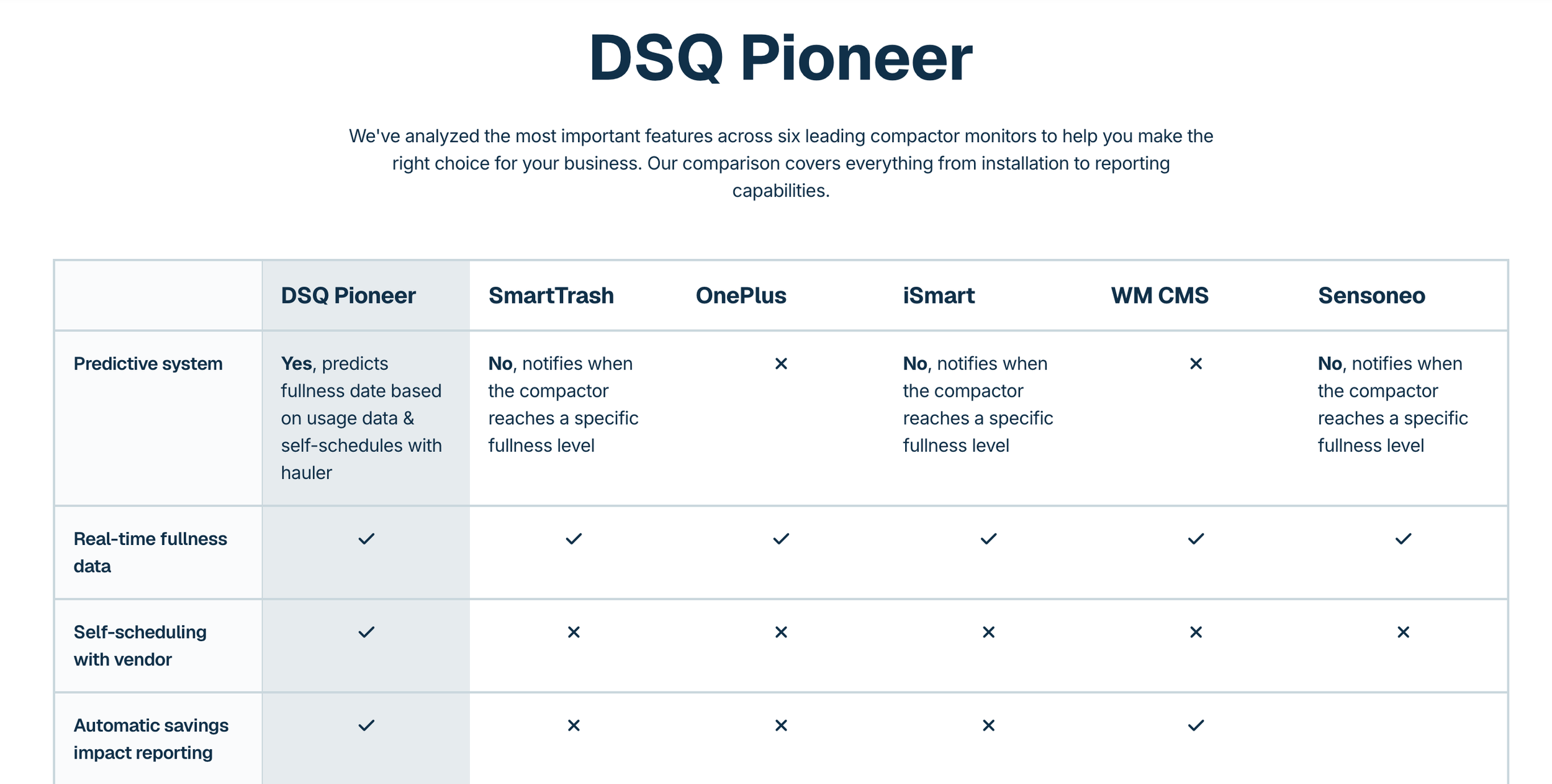
On the marketing side, I used the same intelligence to write feature comparison charts and 1:1 competitor comparisons, the kind of content that's only convincing if it's actually true, which, thanks to the deep dive, it was. I repeated this process for each product in the technology suite.
And because a single discovery session goes stale the moment the roadmap changes, I instituted a recurring product-marketing cadence with product owners. Every new feature had a marketing plan and a sales talk track attached before it ever shipped. No more marketing finding out about launches after the fact.
The payoff showed up somewhere I didn't fully expect: search. The competitor comparisons and feature content, because they were grounded in real product truth rather than marketing spin, became the most-cited source for the product — both in Google's organic results and in how LLMs answered questions about it. Turns out being accurate is also, conveniently, an SEO strategy.
Maybe the more durable win, though, was structural: the brand went from having no product marketing function to having a system that kept working after I built it. Cadence baby, not a one-time project.