
The Proof: AI Strategy
That time I built an AI analyst to decipher web performance and create recommendations for an even stronger web presence that converts.
The One When I Put AI to Work
The problem: The website contained hundreds of pages, dozens of content types, and a whole lotta marketing activity. I had plenty of data but no efficient way to identify what was actually driving engagement, authority, and product interest.
The remedy: Build an AI-assisted content intelligence process that could analyze website performance, identify patterns, and turn analytics into strategic recommendations.
The result: Created a repeatable content analysis framework that evaluated website pages, blogs, case studies, and LLM visibility to uncover content themes driving traffic, engagement, and product interest.
The details: Most content audits stop at reporting metrics. But I didn’t want to just present “hey people are landing here!” and expect applause. I wanted something more useful.
Using exports from Google Analytics, website content inventories, case studies, blog performance data, and LLM query results, I developed an AI-assisted analysis process that evaluated content performance across multiple dimensions, including traffic, engagement, search intent, topic focus, and buyer relevance.
Rather than manually reviewing hundreds of pages, I used AI to identify patterns across the content ecosystem and surface strategic opportunities that would have taken days of manual analysis to uncover. The framework analyzed:
Website traffic and engagement patterns
Blog content performance
Case study effectiveness
Product visibility within large language models
Internal linking opportunities
Content themes correlated with engagement and product interest
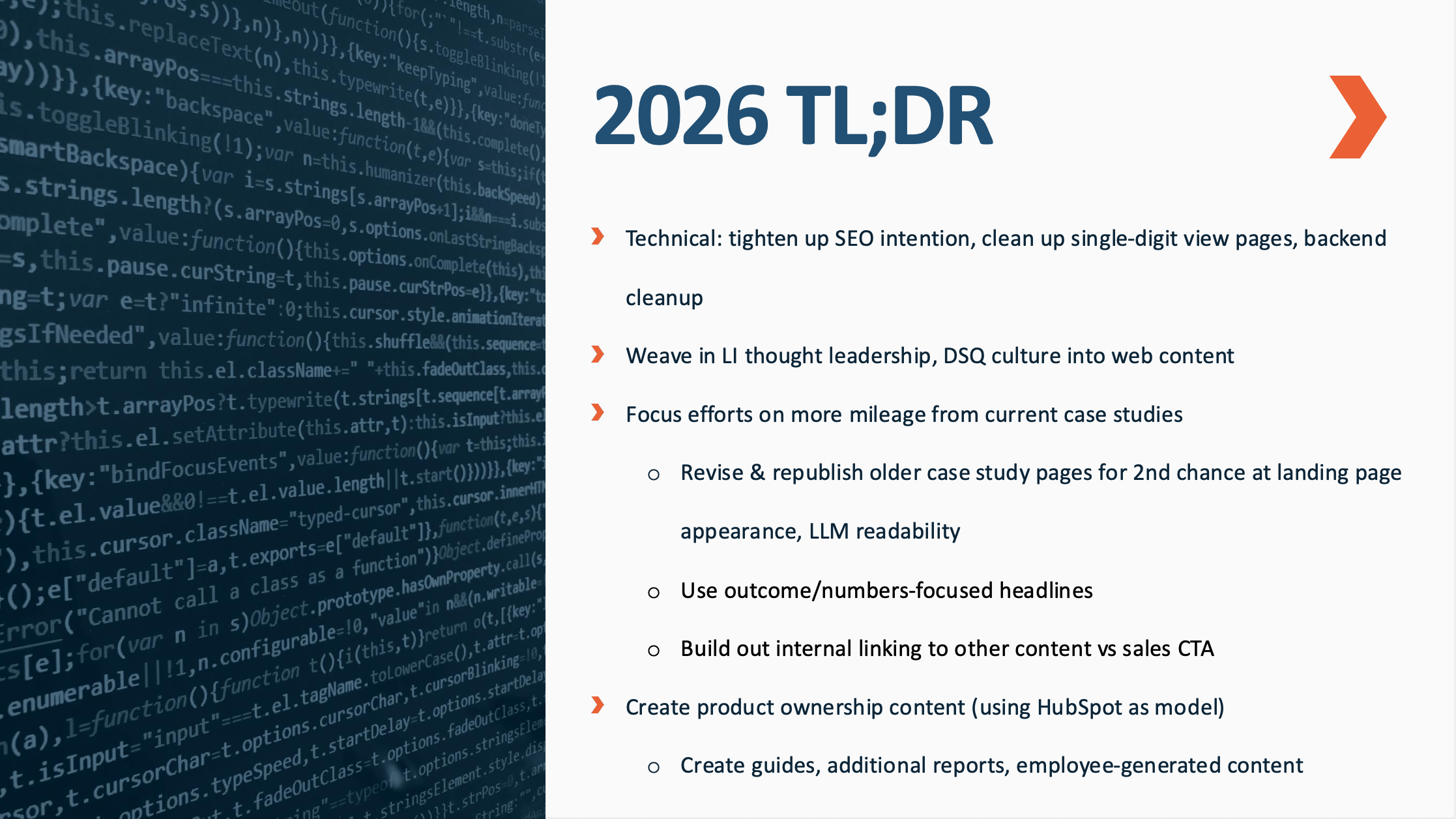
The analysis revealed several actionable insights: data-backed reports and industry research consistently outperformed other content types, and product comparison content, explainers, and educational resources generated stronger engagement than company announcements. Case studies featuring measurable financial outcomes attracted more traffic and held attention longer than those built around generic marketing language.
This provided me with a list of action items for improving current content (rewrite case study titles), eliminating content creation that wasn’t producing results (do we really need to produce at this pace?), and building a content roadmap for what was missing (an industry education hub).
Having a solid intuition for content makes a great marketer - but sometimes you need a robot to help you realize if that intuition is paying off or not.